
Face Mask Safety Guidelines for Healthcare and Industrial Environments
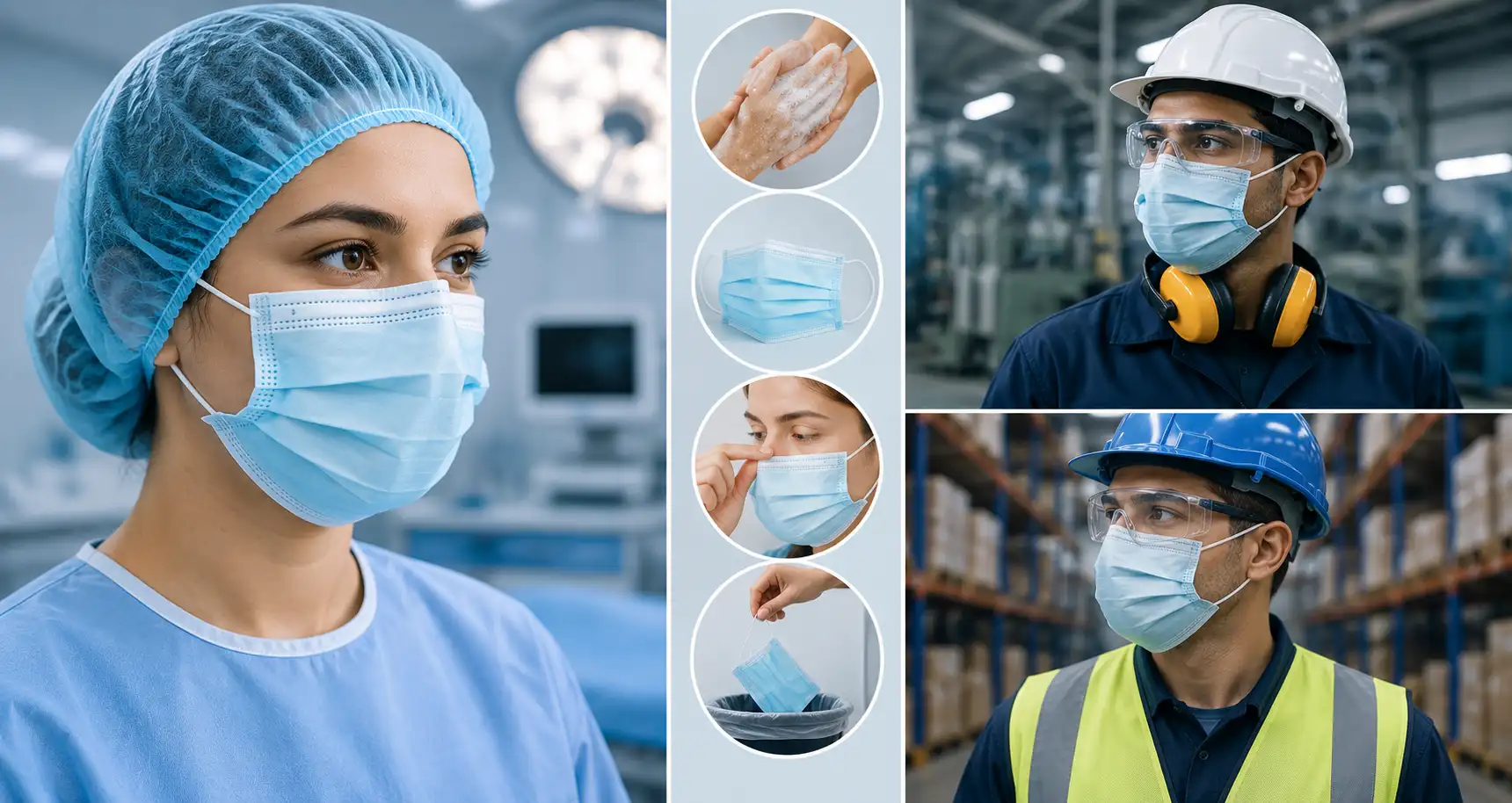
Face masks have become one of the most important forms of personal protective equipment (PPE) used across healthcare facilities, industrial workplaces, laboratories, pharmaceutical units, food processing plants, manufacturing facilities, and various professional environments. Their primary purpose is to provide a protective barrier against airborne particles, dust, droplets, contaminants, and other workplace hazards.
In healthcare settings, face masks help reduce the spread of infections and protect both patients and healthcare workers. In industrial environments, they protect employees from dust, fumes, airborne particles, and potentially harmful substances that may affect respiratory health.
However, simply wearing a face mask is not enough. To achieve effective protection, individuals must follow proper face mask safety guidelines, including correct usage, fitting, handling, storage, and disposal practices.
This comprehensive guide explains everything organizations and employees need to know about face mask safety in healthcare and industrial environments, helping businesses maintain hygiene, workplace safety, and regulatory compliance.
Why Face Masks Are Important
Face masks act as a protective barrier between the respiratory system and external contaminants.
Depending on the environment, face masks help protect against:
- Airborne particles
- Dust and debris
- Respiratory droplets
- Bacteria
- Viruses
- Allergens
- Chemical particles
- Workplace pollutants
They are a critical component of workplace safety programs and personal protection strategies.
Understanding Face Masks and Their Purpose
Face masks are designed to reduce exposure to contaminants that may enter the body through the nose and mouth.
Their effectiveness depends on:
- Proper mask selection
- Correct fitting
- Consistent usage
- Safe handling
- Timely replacement
A poorly worn mask may provide significantly reduced protection.
Importance of Face Masks in Healthcare Environments
Healthcare professionals regularly interact with patients and biological materials.
This increases exposure risks.
Face masks help:
- Reduce infection transmission
- Protect healthcare workers
- Protect patients
- Support hygiene protocols
- Minimize contamination risks
Hospitals, clinics, diagnostic centers, and laboratories rely heavily on face masks as part of their infection-control strategies.
Importance of Face Masks in Industrial Environments
Industrial workplaces often expose employees to:
- Dust particles
- Construction debris
- Manufacturing emissions
- Airborne contaminants
- Fine particulate matter
Without proper respiratory protection, long-term exposure can negatively impact worker health.
Face masks help reduce these risks and support occupational safety standards.
Types of Face Masks Commonly Used
Different environments require different levels of protection.
Disposable Face Masks
Widely used in:
- Hospitals
- Clinics
- Offices
- Food processing facilities
Benefits include:
- Lightweight design
- Easy disposal
- Hygienic single-use protection
Surgical Face Masks
Commonly used in healthcare environments.
Designed to:
- Block respiratory droplets
- Reduce contamination risks
- Maintain sterile conditions
Industrial Protective Masks
Used in workplaces where dust and airborne particles are present.
Suitable for:
- Manufacturing plants
- Construction sites
- Warehouses
- Workshops
Face Mask Safety Guidelines
Following proper safety guidelines ensures maximum protection.
1. Wash or Sanitize Hands Before Handling Masks
Before touching a face mask:
- Wash hands thoroughly with soap and water.
- Use alcohol-based hand sanitizer if necessary.
Clean hands reduce contamination risks.
2. Inspect the Mask Before Use
Always check masks for:
- Tears
- Holes
- Damage
- Contamination
A damaged mask should never be used.
3. Wear the Mask Correctly
Proper positioning is critical.
The mask should:
- Cover the nose completely
- Cover the mouth completely
- Fit securely under the chin
There should be minimal gaps around the edges.
4. Avoid Touching the Front Surface
The front portion of a mask may collect contaminants during use.
Avoid:
- Frequent adjustment
- Touching the mask surface
- Pulling masks below the chin
If touched accidentally, sanitize hands immediately.
5. Ensure Proper Fit
A loose-fitting mask reduces effectiveness.
The mask should:
- Fit comfortably
- Stay secure during movement
- Cover all respiratory entry points
Proper fitting improves protection significantly.
6. Replace Masks When Necessary
Masks should be replaced when they become:
- Wet
- Dirty
- Damaged
- Difficult to breathe through
Disposable masks should never be reused unless specifically designed for extended use.
Face Mask Safety in Hospitals
Healthcare facilities have strict infection-control requirements.
Healthcare workers should:
- Wear masks consistently
- Replace masks regularly
- Follow patient-care protocols
- Dispose of used masks safely
Proper mask usage helps protect both patients and staff.
Face Mask Safety in Laboratories
Laboratory personnel frequently work with:
- Biological samples
- Chemicals
- Research materials
Masks help reduce contamination risks and support laboratory safety procedures.
Face Mask Safety in Pharmaceutical Manufacturing
Pharmaceutical facilities require highly controlled environments.
Face masks help:
- Prevent contamination
- Protect products
- Maintain compliance standards
Consistent mask usage is essential in production areas.
Face Mask Safety in Food Processing Facilities
Food safety depends on maintaining clean production environments.
Masks help prevent:
- Product contamination
- Airborne particle transfer
- Hygiene violations
Employees should wear masks properly throughout food-handling operations.
Face Mask Safety in Construction and Industrial Sites
Construction sites often generate:
- Dust
- Concrete particles
- Airborne debris
Industrial face masks help reduce inhalation risks and improve worker safety.
Common Face Mask Mistakes
Many people unintentionally reduce mask effectiveness.
Common mistakes include:
Wearing Below the Nose
The nose must always remain covered.
Touching the Front Frequently
This may transfer contaminants.
Reusing Disposable Masks
Single-use masks should be discarded appropriately.
Wearing Damaged Masks
Protection decreases significantly.
Improper Storage
Masks should remain clean before use.
Best Practices for Mask Storage
Unused masks should be stored:
- In clean environments
- Away from moisture
- Away from direct sunlight
- In sealed packaging when possible
Proper storage maintains product quality.
Proper Disposal of Disposable Face Masks
After use:
- Remove using the ear loops or straps.
- Avoid touching the front surface.
- Dispose in appropriate waste containers.
- Wash or sanitize hands immediately.
Proper disposal reduces contamination risks.
Benefits of Following Face Mask Safety Guidelines
Organizations that implement mask safety practices benefit from:
Improved Workplace Safety
Employees face reduced exposure risks.
Better Hygiene Standards
Supports cleanliness and infection prevention.
Reduced Health Risks
Protects workers and visitors.
Regulatory Compliance
Helps organizations meet safety requirements.
Enhanced Employee Confidence
Workers feel safer in protected environments.
Why Face Masks Remain Essential in Professional Environments
Even as workplace safety practices evolve, face masks continue to play a vital role in protection.
Industries that rely heavily on face masks include:
- Healthcare
- Pharmaceuticals
- Manufacturing
- Food Processing
- Laboratories
- Construction
- Warehousing
Masks remain one of the simplest and most effective protective measures available.
How Businesses Can Improve Face Mask Compliance
Organizations can strengthen safety programs by:
Providing Quality Masks
Use reliable protective products.
Training Employees
Educate workers on proper usage.
Monitoring Compliance
Ensure guidelines are followed consistently.
Maintaining Inventory
Keep adequate supplies available.
Promoting Safety Culture
Encourage personal responsibility and workplace awareness.
Future of Face Mask Safety
Protective equipment continues to evolve.
Future face mask developments may include:
- Improved filtration technology
- Enhanced comfort
- Better breathability
- Sustainable materials
- Smart protective features
Despite these advancements, proper usage will remain the most important factor in achieving effective protection.
Conclusion
Face masks are an essential component of workplace safety and hygiene in healthcare and industrial environments. They help reduce exposure to airborne contaminants, support infection-control efforts, and improve overall workplace protection.
However, the effectiveness of face masks depends heavily on proper usage. Following face mask safety guidelines—including correct fitting, handling, replacement, storage, and disposal—ensures maximum protection for workers, patients, visitors, and customers.
Whether used in hospitals, laboratories, pharmaceutical facilities, food processing plants, or industrial workplaces, face masks remain one of the most practical and effective tools for maintaining safety, hygiene, and operational excellence.
You can reach out to Z Plus Disposable’s Marketing Team through Email, Call or WhatsApp.
Email: marketing@zplusdisposable.com
Contact No.: +91- 90544 06593/ 74900 20882
Website: Zplusdisposable.com
Z Plus Disposable Pvt. Ltd, Ahmedabad – GJ
FAQ's
1. Why are face masks important in healthcare environments?
Face masks help reduce infection transmission and protect healthcare workers and patients.
2. How often should disposable face masks be replaced?
Disposable masks should be replaced when they become dirty, wet, damaged, or difficult to breathe through.
3. Are face masks required in industrial workplaces?
Many industrial environments use face masks to protect workers from dust, particles, and airborne contaminants.
4. What is the correct way to wear a face mask?
A face mask should fully cover the nose, mouth, and chin with minimal gaps around the edges.
5. Why should the front of a face mask not be touched?
The front surface may collect contaminants during use and touching it can increase contamination risks.