
Disposable Apron vs Reusable Apron: Which Is Better for Hygiene?

Maintaining hygiene and personal protection is essential in industries such as healthcare, food processing, laboratories, pharmaceuticals, hospitality, manufacturing, and cleaning services. One of the most commonly used protective garments in these environments is the apron. Aprons act as a barrier between the wearer and contaminants, helping prevent the spread of dirt, liquids, bacteria, chemicals, and other harmful substances.
When choosing protective clothing, businesses often face an important question: Should they use disposable aprons or reusable aprons?
Both options serve the same basic purpose, but they differ significantly in terms of hygiene, convenience, maintenance, safety, and long-term cost. Understanding these differences is essential for selecting the right solution for your workplace.
In this comprehensive guide, we’ll compare disposable aprons and reusable aprons across multiple factors and explain why disposable aprons are increasingly preferred in hygiene-sensitive environments.
Understanding Disposable Aprons
A Disposable Apron is a single-use protective garment designed to be worn once and discarded after use.
These aprons are typically manufactured from lightweight plastic materials such as:
- Polyethylene (PE)
- Low-Density Polyethylene (LDPE)
- High-Density Polyethylene (HDPE)
Disposable aprons provide quick, convenient protection against:
- Dirt
- Liquids
- Food splashes
- Bodily fluids
- Dust
- Contaminants
They are widely used in:
- Hospitals
- Clinics
- Laboratories
- Food processing facilities
- Restaurants
- Cleaning services
- Pharmaceutical industries
Understanding Reusable Aprons
Reusable Aprons are designed for multiple uses and are typically made from:
- Cotton
- Polyester
- PVC-coated fabric
- Rubberized materials
- Industrial textiles
After use, reusable aprons must be:
- Cleaned
- Sanitized
- Dried
- Stored properly
These aprons are commonly used in:
- Commercial kitchens
- Manufacturing units
- Workshops
- Industrial settings
Why Hygiene Matters
Hygiene plays a critical role in preventing contamination.
Poor hygiene practices can lead to:
- Infection spread
- Product contamination
- Workplace hazards
- Regulatory violations
- Reduced customer trust
Protective clothing is one of the first lines of defense against contamination.
The choice between disposable and reusable aprons directly affects hygiene standards.


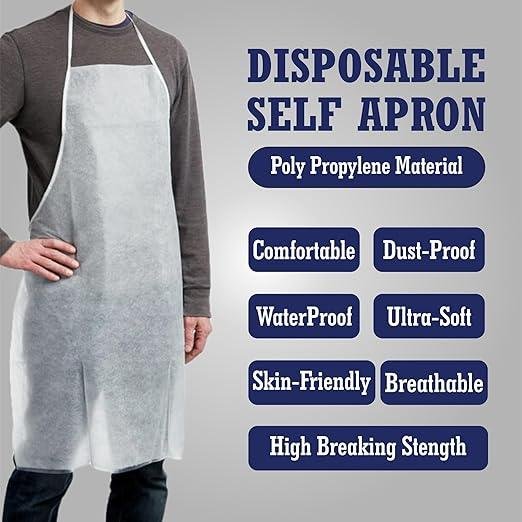

Disposable Apron vs Reusable Apron: Hygiene Comparison
1. Contamination Risk
Disposable Aprons
Disposable aprons offer a fresh, uncontaminated surface for every use.
Benefits include:
- No previous contamination
- Reduced cross-contamination risk
- Improved infection control
Every user receives a brand-new apron.
Reusable Aprons
Reusable aprons can become contaminated during use.
Even after washing, contamination risks may remain if:
- Cleaning procedures are inadequate
- Storage conditions are poor
- Fabric becomes damaged
Winner: Disposable Aprons
For hygiene-sensitive environments, disposable aprons provide superior contamination control.
2. Infection Prevention
In healthcare settings, infection prevention is a top priority.
Disposable Aprons
Single-use designs help prevent:
- Bacterial transmission
- Viral spread
- Cross-infection
Healthcare workers can replace aprons between patients.
Reusable Aprons
Reusable garments may transfer contaminants if not cleaned properly between uses.
Winner: Disposable Aprons
Healthcare facilities often prefer disposable options because of their infection-control benefits.
3. Cleaning Requirements
Disposable Aprons
No cleaning required.
After use:
- Remove
- Dispose safely
- Replace with a new apron
Reusable Aprons
Require:
- Washing
- Drying
- Sanitization
- Inspection
These processes consume:
- Time
- Water
- Labor
- Energy
Winner: Disposable Aprons
They eliminate cleaning and maintenance requirements completely.
4. Convenience
Disposable Aprons
Offer immediate availability.
Employees simply:
- Open package
- Wear apron
- Dispose after use
No additional processing is required.
Reusable Aprons
Require:
- Collection
- Laundry management
- Storage systems
This increases operational complexity.
Winner: Disposable Aprons
They provide unmatched convenience.
5. Cost Considerations
Disposable Aprons
Low upfront cost.
Ideal for:
- High-turnover environments
- Visitor use
- Temporary protection
Reusable Aprons
Higher initial purchase cost.
Long-term value depends on:
- Cleaning expenses
- Replacement frequency
- Maintenance costs
Winner: Depends on Usage
For hygiene-critical industries, disposable aprons often provide better overall value.
Disposable Aprons in Healthcare
Healthcare facilities rely heavily on disposable protective equipment.
Disposable aprons are commonly used by:
- Doctors
- Nurses
- Technicians
- Caregivers
- Visitors
Benefits include:
- Better infection control
- Reduced contamination risks
- Faster apron replacement
- Compliance with hygiene protocols
Hospitals prioritize safety, making disposable aprons a preferred choice.
Disposable Aprons in Food Processing
Food production environments require strict cleanliness standards.
Disposable aprons help:
- Prevent food contamination
- Protect workers
- Maintain hygiene compliance
- Improve food safety
Because food-contact environments are highly sensitive, disposable protection is often recommended.
Disposable Aprons in Laboratories
Laboratories handle:
- Biological samples
- Chemicals
- Testing materials
Contamination can affect:
- Research accuracy
- Test results
- Workplace safety
Disposable aprons provide a practical solution for contamination control.
Environmental Considerations
Some businesses consider reusable aprons more environmentally friendly because they reduce waste.
However, reusable aprons require:
- Water consumption
- Detergents
- Electricity
- Transportation
Disposable apron manufacturers are increasingly developing recyclable and eco-friendly alternatives.
Organizations should evaluate both environmental and hygiene requirements before making decisions.
Key Benefits of Disposable Aprons
Enhanced Hygiene
Provides a clean surface for every use.
Reduced Cross-Contamination
Minimizes contamination transfer between tasks.
Improved Workplace Safety
Supports infection-control protocols.
Easy Storage
Compact packaging simplifies inventory management.
Convenient Use
No washing or maintenance required.
Cost-Effective for High-Risk Environments
Ideal for healthcare and food industries.
Industries That Prefer Disposable Aprons
Healthcare Facilities
Hospitals and clinics prioritize infection prevention.
Pharmaceutical Manufacturing
Supports strict contamination-control requirements.
Food Processing Plants
Protects products and workers.
Laboratories
Maintains clean testing environments.
Cleaning Services
Provides quick and hygienic protection.
Diagnostic Centers
Supports patient and staff safety.
Best Practices for Apron Usage
Regardless of apron type, proper usage is important.
Replace Damaged Aprons Immediately
Compromised protection increases contamination risks.
Follow Workplace Hygiene Policies
Ensure consistent apron usage procedures.
Dispose of Single-Use Aprons Correctly
Follow local waste-management regulations.
Train Employees
Proper use improves effectiveness.
Store Aprons Properly
Maintain cleanliness before use.
Why Businesses Are Choosing Disposable Aprons
Modern workplaces increasingly prioritize:
- Hygiene
- Safety
- Efficiency
- Compliance
Disposable aprons address all these requirements effectively.
Their single-use design reduces contamination concerns while simplifying workplace operations.
As hygiene standards continue to evolve, disposable protective apparel remains an important component of workplace safety programs.
Future of Protective Aprons
The future of protective clothing is focused on:
- Better hygiene
- Improved comfort
- Sustainable materials
- Enhanced safety
Disposable apron technology continues to improve, offering businesses better protection and convenience.
Organizations that prioritize hygiene will continue adopting disposable protective solutions to meet evolving safety standards.
Conclusion
When comparing disposable aprons and reusable aprons, the best choice largely depends on the level of hygiene required.
Reusable aprons can be suitable for certain industrial applications, but they require regular cleaning, maintenance, and monitoring to remain safe.
Disposable aprons provide superior hygiene, reduced contamination risks, greater convenience, and stronger infection-control benefits. These advantages make them the preferred choice for healthcare facilities, laboratories, food processing plants, pharmaceutical companies, and other hygiene-sensitive environments.
For organizations where cleanliness, safety, and contamination prevention are priorities, disposable aprons remain one of the most practical and effective protective solutions available today.
You can reach out to Z Plus Disposable’s Marketing Team through Email, Call or WhatsApp.
Email: marketing@zplusdisposable.com
Contact No.: +91- 90544 06593/ 74900 20882
Website: Zplusdisposable.com
Z Plus Disposable Pvt. Ltd, Ahmedabad – GJ
FAQ's
1. Which is more hygienic, a disposable apron or a reusable apron?
Disposable aprons are generally more hygienic because they provide a clean, uncontaminated surface for every use.
2. Why are disposable aprons used in hospitals?
Disposable aprons help reduce cross-contamination and support infection-control protocols.
3. Are reusable aprons safe for healthcare environments?
They can be used if properly cleaned and sanitized, but disposable aprons offer better contamination control.
4. Do disposable aprons help prevent infection spread?
Yes, single-use aprons help reduce contamination transfer between patients and work areas.
5. Which apron is best for food processing?
Disposable aprons are commonly preferred because they help maintain strict food hygiene standards.